Keeping It Level
A walk-in tub and a walk-in shower don’t solve the same problem — and choosing the wrong one is an expensive mistake that’s nearly impossible to undo. The tub wins on therapeutic value. The shower wins on everything else — caregiver access, emergency exit, long-term adaptability, and daily practicality. If you’re not sure where your mobility will be in ten years, build for the worst case now.
As a contractor who has installed many walk-in tubs and showers, I’ve had the opportunity to return to homes later to see which renovation actually improved the homeowner’s life—and which one became a source of frustration. Choosing between a walk-in tub vs walk-in shower isn’t just a design choice; it’s a high-stakes decision about how you’ll move and live for the next decade.
If you’re planning a bathroom remodel for seniors, both options can drastically reduce fall risks. However, they solve very different problems. This walk-in tub vs walk-in shower guide breaks down the real-world differences in cost, safety, and long-term adaptability based on what I’ve seen on actual job sites while helping families with aging in place transitions.
Quick Comparison: Walk-In Tub vs Walk-In Shower
| Feature | Walk-In Tub | Walk-In Shower |
| Threshold Height | 3–6 inches | 0–2 inches |
| Primary Use | Soaking & Hydrotherapy | Efficiency & Accessibility |
| Caregiver Access | Difficult (high walls) | Excellent (open entry) |
| Emergency Exit | Slow (must drain first) | Instant |
| Wait Time | 10–15 mins (fill/drain) | None |
| Adaptability | Low (fixed unit) | High (can add seats/bars) |
1. Walk-In Tub vs Walk-In Shower: Why the Tub Means a Waiting Period
A walk-in tub is a specialized bathtub with a gasket-sealed door in the side. You open the door, step over a small threshold, sit on the built-in seat, and seal the door behind you.
The Reality of “Fill and Drain”
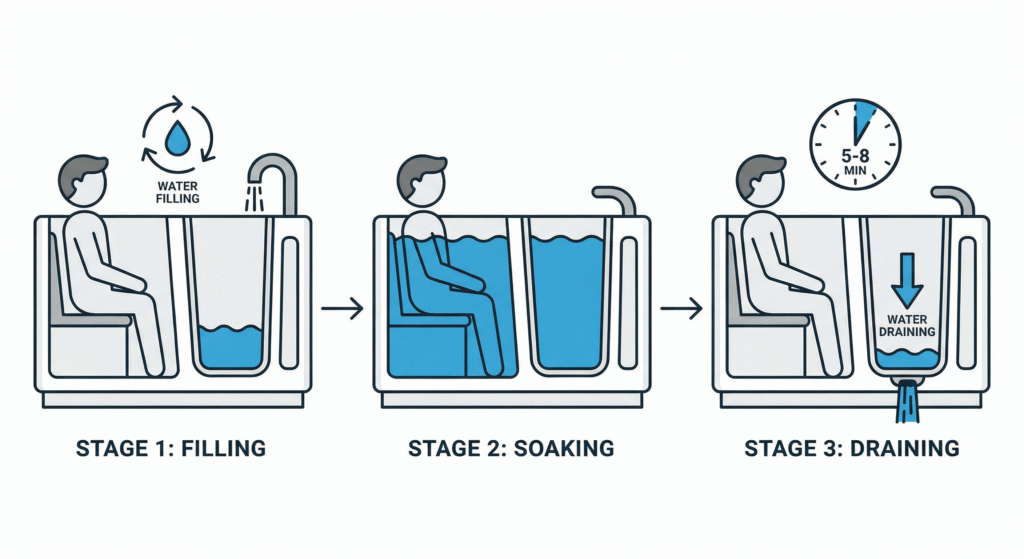
In my experience, the biggest complaint from homeowners isn’t safety—it’s the wait. You must sit in the tub while it fills and wait inside while it drains. Every. Single. Time. Even with a “fast-drain” system, you are sitting in a cooling tub for 5 to 8 minutes while the water clears the door line. If you’re someone who gets cold easily or is always in a hurry, this becomes a major hurdle to daily hygiene.
Contractor Field Observation: Maintenance
Door seals are the “Achilles heel” of the walk-in tub. If you don’t keep that gasket meticulously clean, it will eventually leak. I’ve seen $15,000 tubs cause $5,000 in floor damage because soap scum buildup prevented a perfect seal.
Additionally, if the tub has hydrotherapy jets, you must run a cleaning cycle monthly. In the field, I’ve seen these systems fail when homeowners neglect the internal plumbing, leading to biofilm buildup in the PVC lines. These are mechanical systems; they require more hands-on care than a standard shower.
2. The Walk-In Shower: The Practical Powerhouse
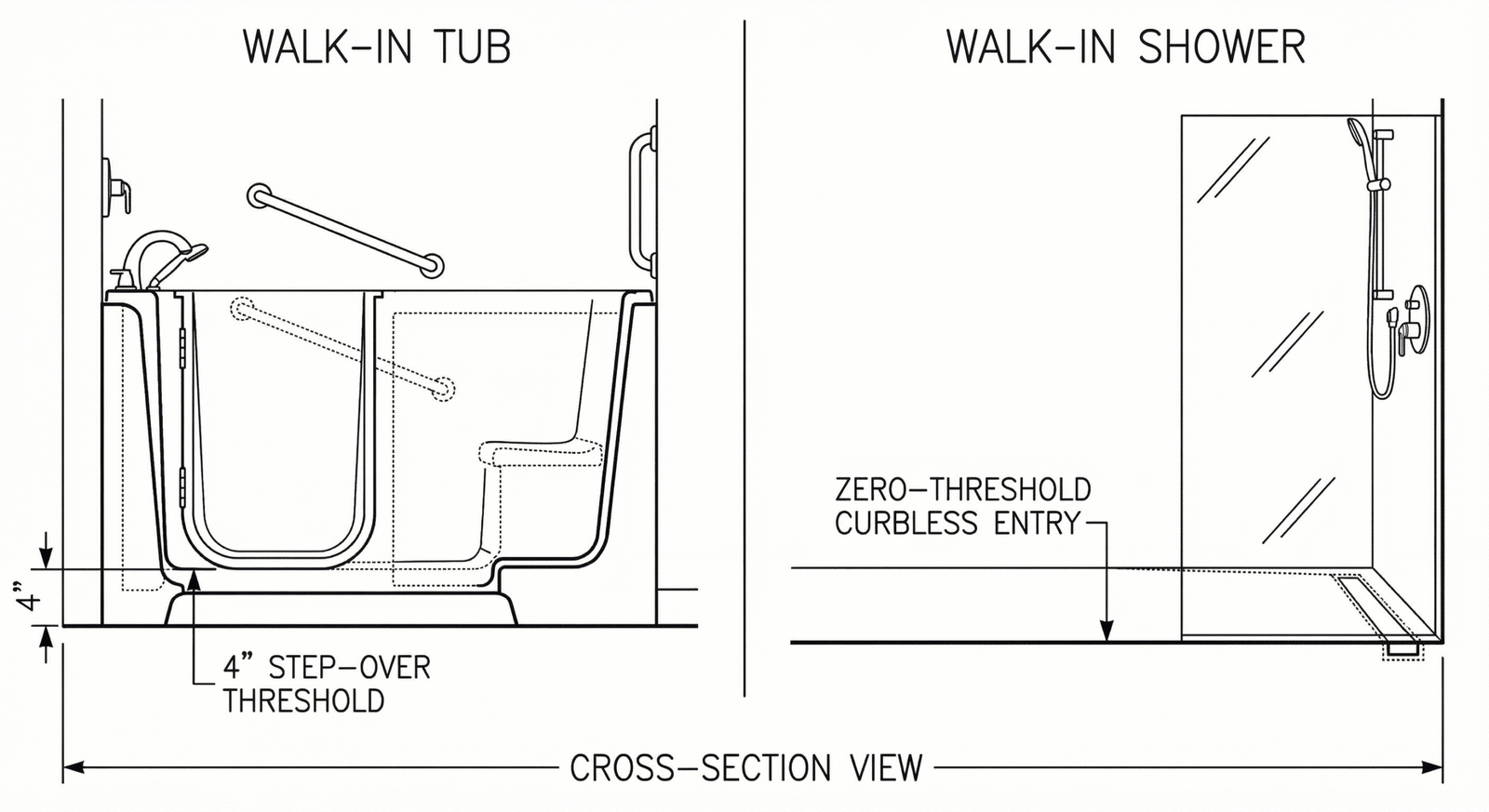
A walk-in shower—specifically a curbless shower or “zero-threshold” design—allows you to walk or roll directly into the bathing area without lifting your foot.
Long-Term Adaptability
When I ask homeowners, “Where will your mobility be in 5 to 10 years?”, the shower almost always wins. Aging in place is about anticipating future needs, not just solving today’s problems. If you eventually need a walker or a wheelchair, a zero-threshold shower is ready for you on day one. You can’t roll a wheelchair into a walk-in tub, and modifying a tub after installation is nearly impossible.
Caregiver Support
If you ever reach a point where you need help bathing, a walk-in shower is significantly easier for a caregiver. They can stand outside the “splash zone” and use a handheld wand to help you, whereas a walk-in tub creates a physical barrier that makes it nearly impossible for someone to assist you without getting into the tub themselves. For everything you need to know about choosing and installing a handheld wand correctly my Handheld Shower Head for Seniors Guide covers the structural requirements and what to check behind the wall before installation.
When a Walk-In Tub Genuinely Wins
Despite the practical advantages of a shower, there are specific scenarios where a tub is the superior medical choice for senior bathroom safety. If you suffer from severe rheumatoid arthritis, chronic muscle spasms, or late-stage circulation issues, the therapeutic benefits of deep-tissue hydrotherapy can be life-changing.
A walk-in tub allows for a “buoyancy” that a shower bench cannot replicate. For users who find that 20 minutes of soaking is the only thing that manages their daily pain levels, the trade-off of the fill/drain wait time is a small price to pay for the relief provided by heated jets.
Safety Comparison: The Physics of the Bathroom
When evaluating a walk-in tub vs walk-in shower for fall prevention, the transition phase — stepping in or out of the bathing area — is where most injuries happen.
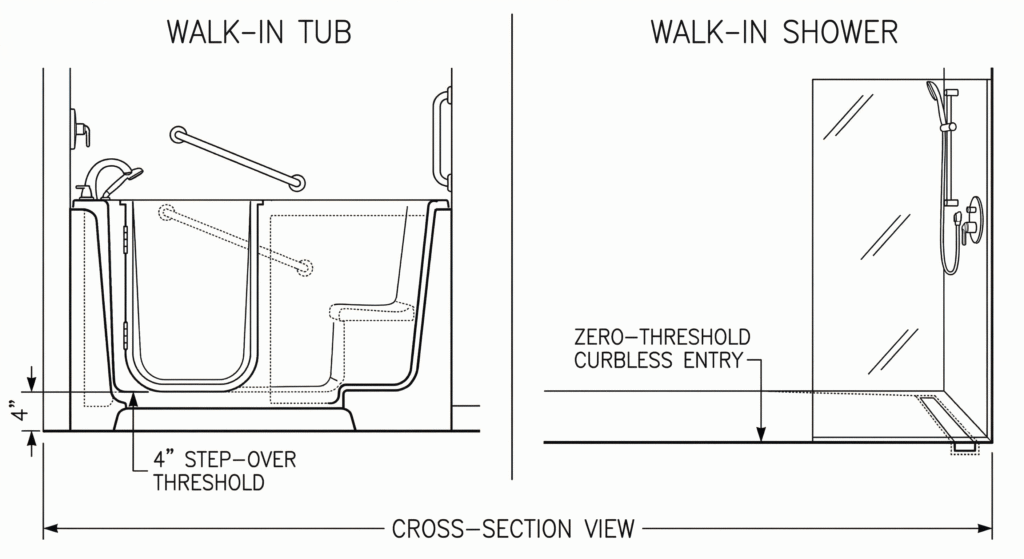
- Walk-In Tub Risk: You are still stepping over a 3-to-6-inch threshold. While lower than a standard tub, it still requires one-legged balance on a potentially wet floor.
- Walk-In Shower Risk: The risk here is mostly related to “slippage” on a larger floor area. This is why I always insist on Coefficient of Friction (COF) rated tile or slip-resistant pan liners. To learn more about tile ratings read my guide on choosing the best non-slip tile.
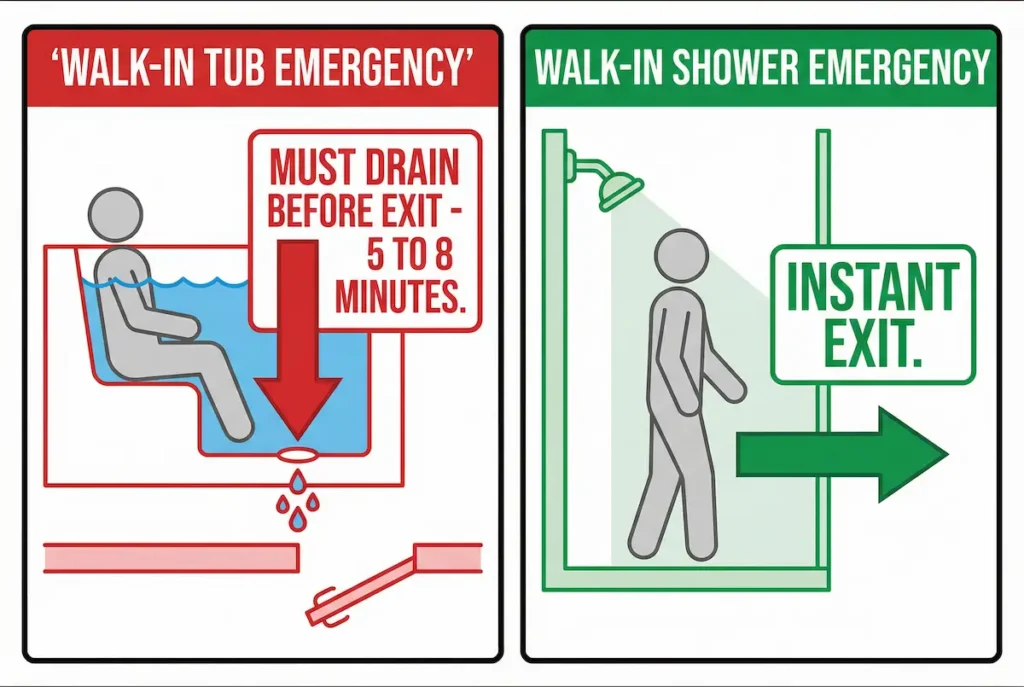
The Emergency Factor: In a walk-in shower, you can exit the moment you feel dizzy. In a walk-in tub, you are essentially “locked in” until the water drains. If you have a medical emergency, that drain time feels like an eternity.
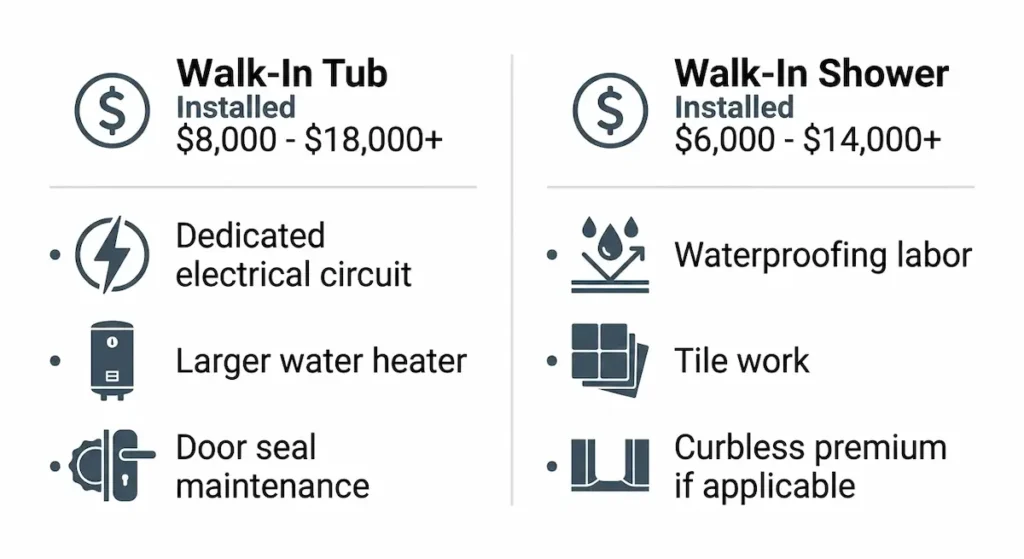
Cost Comparison (Installed)
Pricing varies by region, but these are the realistic brackets for professional installation:
Walk-In Tub: $8,000 – $18,000+
The unit itself is expensive, but the hidden costs are in the infrastructure.
- Electrical: Jets or heated backrests usually require a dedicated 20-amp circuit.
- Plumbing: You may need a larger water heater. A standard tank often runs cold before these high-capacity tubs are half-full.
Walk-In Shower: $6,000 – $14,000+
The cost here is mostly in the labor of waterproofing and tile work.
- The “Curbless” Premium: If we have to “notch” your floor joists to create a zero-entry curbless shower threshold, expect the price to move toward the higher end of the bracket. For a full breakdown of what that structural work actually involves my Curbless Shower Subfloor Guide covers the three diagnostic tests every bathroom floor needs to pass before a curbless conversion begins.
- Contractor Tip: If you replace a tub with a shower, your existing wall surround will need to be replaced. Shower walls are taller than tub walls, so you can’t just “patch” the bottom.
Resale Value: The Market Reality
If you plan on selling your home in the future, the walk-in tub vs walk-in shower choice matters significantly for resale value. In my experience, walk-in showers appeal to almost everyone. They feel like a modern, “spa-like” upgrade that works for kids, adults, and seniors alike.
Walk-In Tubs, however, appeal to a very narrow demographic. Many buyers see them as a “medical” modification. I’ve seen potential buyers walk through a home and immediately start calculating the $5,000+ cost to tear out the walk-in tub and replace it with something more versatile. Unless you find a buyer specifically looking for those medical features, a tub can actually make your home harder to sell.
Frequently Asked Questions
Does Medicare cover walk-in tubs or showers?
Original Medicare (Part A and B) almost never covers these as they are considered “home convenience” items. However, some Medicare Advantage plans or VA grants (like the HISA grant) may provide partial reimbursement.
Will a walk-in tub make my bathroom humid?
Yes. Because the water sits in the open air for a long time during the fill and drain cycles, you’ll generate a lot of steam. I always recommend upgrading to a high-CFM (Cubic Feet per Minute) exhaust fan to prevent mold growth on your ceiling and walls.
Can a walk-in shower still have a seat?
Absolutely. In fact, I recommend it for almost every aging in place project. You can choose a built-in tiled bench or a fold-down seat that stays out of the way when you want to stand. For a full breakdown, see my Shower Bench vs. Shower Chair Guide.
How does a walk-in tub affect resale flexibility?
As mentioned, it can be polarizing. A walk-in shower is seen as a universal upgrade, whereas a tub is often seen as a specialized medical fixture. If resale value is a top-three priority for you, the shower is the safer bet.
Can I put a walk-in tub on a second floor?
Yes, but I always have a structural engineer check the floor joists. A full walk-in tub plus a 200lb person can weigh over 800lbs in a very small footprint.
Which is easier to clean?
The walk-in shower. Tubs have more mechanical parts, gaskets, and jets that require specialized cleaning.
Is it true walk-in tubs leak often?
Only if the gasket isn’t maintained. High-quality tubs come with a lifetime warranty on the door seal, but that doesn’t cover leaks caused by debris preventing a seal.
How long does installation take?
A tub can sometimes be swapped in 1-2 days if the plumbing and electrical are ready. A full curbless shower conversion usually takes 3-5 days due to the drying time required for waterproofing membranes and grout.
My Final Recommendation
If you have chronic, severe pain that can only be soothed by a hot soak, the walk-in tub is a specialized medical tool that provides therapeutic relief that a shower simply cannot match. It is a “luxury” item for those who need it.
However, for 90% of the seniors I work with in the walk-in tub vs walk-in shower decision, the walk-in shower is the superior choice. It is more adaptable to future mobility changes, easier for caregivers to manage, faster for daily use, and holds its value better for resale. It’s a practical, long-term safety solution that doesn’t “medicalize” the look of your home while supporting your goal of aging in place gracefully.
Ready to evaluate the rest of your home for hidden safety risks? My Free Home Safety Checklist walks through the room-by-room framework — so you can find the risks before they find you.